
Fit the catalog to your lab
Define Categories, Types, dynamic Attributes, select options, sensitive fields, and stable asset records around the equipment you own.
05 / Operate
Manage a configurable equipment library with clear responsibility, loans, transfers, return condition, notifications, attachments, and immutable history.
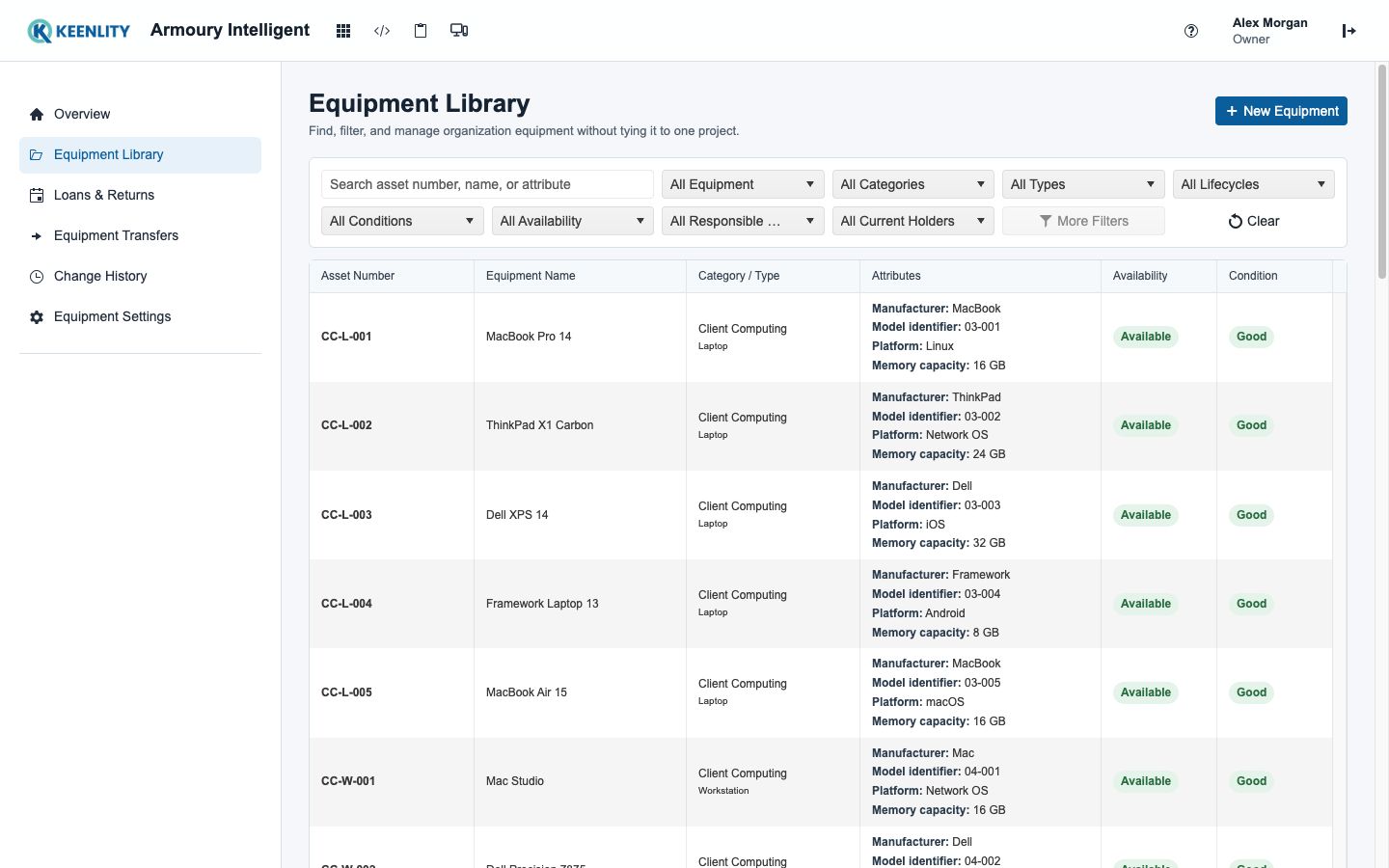
The physical devices behind testing become as traceable as the digital evidence they produce.
A device record teams can trust
Make availability, responsibility, possession, condition, approvals, and due work visible without rebuilding device history from messages and spreadsheets.
Define Categories, Types, dynamic Attributes, select options, sensitive fields, and stable asset records around the equipment you own.
Track the responsible member and current holder independently, together with lifecycle, condition, availability, and approval rules.
Request multiple items, approve reservations, record pickup, extend due dates, accept returns, and document return condition.
Confirm transfers of long-term responsibility, notify due or overdue work, and retain attachments and every equipment event.
From catalog to return
The equipment definition establishes what to track; loan, transfer, extension, and return events show who acted and what state followed.
Create the organization taxonomy and attributes manually, from defaults, or through a versioned JSON import preview.
Set responsibility and holder state, then run the required approval, reservation, pickup, extension, return, or handover flow.
Use notifications, personal tasks, attachments, transfer records, and immutable events to understand every asset change.
Accountability for physical assets
QA and lab teams get one accountable record of availability, possession, responsibility, return condition, and historical use.
Review plans and evaluation